
Your period-tracking app is gaslighting you about your endometriosis—Dr. Kerry Krauss explains why
Special thanks to Kerry Krauss, MD, and the team at Natural Cycles for sharing their clinical data and insights with DO YOU ENDO.
Medical gaslighting (and gaslighting, in general) is, unfortunately, just a part of having endometriosis—especially if you have co-occurring conditions. After years of being told our debilitating pain is “normal,” the psychological toll sets in. We go into our first excision surgeries actively praying for the doctor to find disease, because the only thing scarier than having endo is being told it’s all in your head.
Our best option to build a case (for our own sanity and for our doctors) is to collect data however we can—through symptom journals, smart wearables, and period-tracking apps. The only problem is that most traditional period-tracking apps are incapable of factoring in an irregular cycle.
They rely on basic population averages and generic algorithms. They assume your body operates like it should, which, as we know, ignores the unpredictable reality of an endometriosis cycle. (I was always so jealous of the girls who knew exactly when and how many days they’d have their periods.)
The worst part: If you’re depending on these apps as a form of birth control, you’re 22% more likely to have an unintended pregnancy. That risk increases to 65% if you have an irregular cycle. I’m not just pulling these stats out of my ass; those numbers come straight from a study conducted by the medical team at Natural Cycles, who analyzed over 540,000 menstrual cycles.
To figure out how we’re supposed to track our bodies when standard apps fail us, I reached out to Kerry Krauss, MD, an OB-GYN and senior medical advisor at Natural Cycles. She breaks down why real physiological data matters when you have a systemic illness, how to get ahead of the flares, and how to use your own data to force doctors to finally take your pain seriously.
Our best option to build a case (for our own sanity and for our doctors) is to collect data however we can—through symptom journals, smart wearables, and period-tracking apps. The only problem is that most traditional period-tracking apps are incapable of factoring in an irregular cycle.
They rely on basic population averages and generic algorithms. They assume your body operates like it should, which, as we know, ignores the unpredictable reality of an endometriosis cycle. (I was always so jealous of the girls who knew exactly when and how many days they’d have their periods.)
The worst part: If you’re depending on these apps as a form of birth control, you’re 22% more likely to have an unintended pregnancy. That risk increases to 65% if you have an irregular cycle. I’m not just pulling these stats out of my ass; those numbers come straight from a study conducted by the medical team at Natural Cycles, who analyzed over 540,000 menstrual cycles.
To figure out how we’re supposed to track our bodies when standard apps fail us, I reached out to Kerry Krauss, MD, an OB-GYN and senior medical advisor at Natural Cycles. She breaks down why real physiological data matters when you have a systemic illness, how to get ahead of the flares, and how to use your own data to force doctors to finally take your pain seriously.
For those of us living with endometriosis, tracking our cycles is about so much more than just the ‘period’—it’s about managing a chronic, systemic illness. How can tracking daily symptoms like pelvic pain, digestive issues, and fatigue help Endoviduals establish a baseline for their own health and catch flares early?
Krauss: Tracking gives you a much clearer picture of what’s happening in your body day to day. With endometriosis, symptoms like pelvic pain, bloating, or fatigue can ebb and flow, and it’s hard to piece that together from memory alone.
When you track consistently—whether that’s symptoms, cycle data, or physiological markers like temperature—you start to see patterns. You may notice certain symptoms show up at the same point in your cycle, or that a flare is often preceded by specific changes. That awareness can help you anticipate what’s coming and manage symptoms earlier.
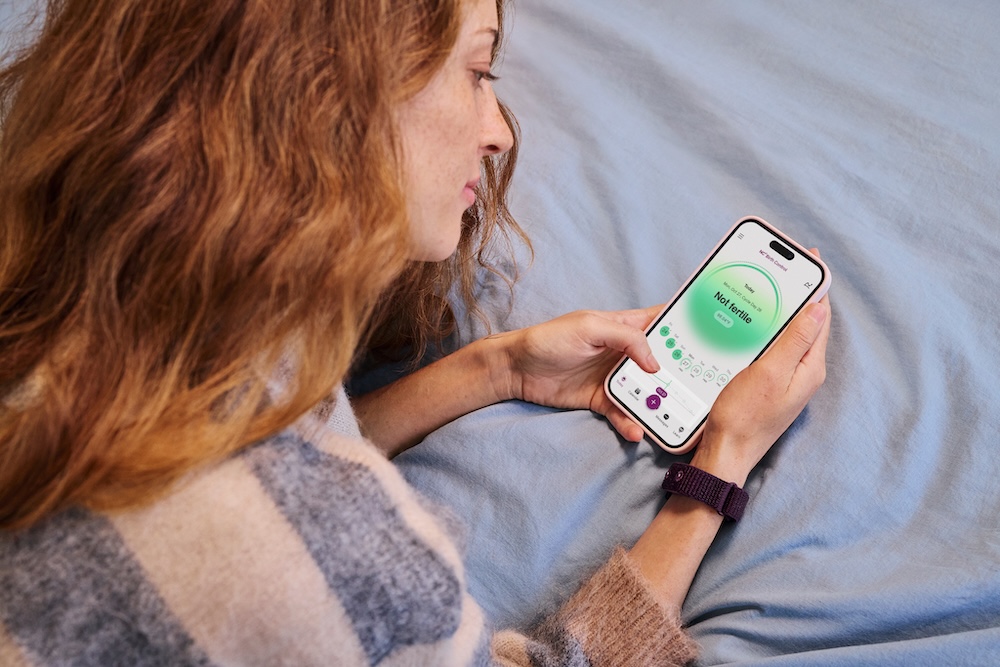
Tools like the Natural Cycles app, which incorporates real physiological data like body temperature alongside your cycle history, can make this even clearer by helping you understand how your body is functioning over time. It’s also incredibly helpful in a medical setting. Instead of trying to summarize months of symptoms on the spot, you’re able to show exactly what you’ve been experiencing, which makes the conversation much more productive.
When you track consistently—whether that’s symptoms, cycle data, or physiological markers like temperature—you start to see patterns. You may notice certain symptoms show up at the same point in your cycle, or that a flare is often preceded by specific changes. That awareness can help you anticipate what’s coming and manage symptoms earlier.
Tools like the Natural Cycles app, which incorporates real physiological data like body temperature alongside your cycle history, can make this even clearer by helping you understand how your body is functioning over time. It’s also incredibly helpful in a medical setting. Instead of trying to summarize months of symptoms on the spot, you’re able to show exactly what you’ve been experiencing, which makes the conversation much more productive.
Natural Cycles recently found that relying on standard calendar-based period-tracking apps can be inaccurate for pregnancy prevention, especially for irregular cycles. Since endo notoriously causes unpredictable cycles, why is it so important for our community to use actual physiological data rather than a generic app algorithm?
Krauss: Many period-tracking and general wellness apps rely on population averages. They predict your cycle based on past dates and assume things will stay consistent. But in reality, cycles can vary from month to month, and that’s especially true for people with conditions like endometriosis.
Physiological data, like body temperature, reflects what your body is doing in real time. It can confirm whether ovulation has occurred, rather than estimating when it might happen. Some apps do use temperature, but they aren’t always designed or regulated for pregnancy prevention, and may not fully account for real-life variability, like shifts in ovulation, coming off hormonal birth control, emergency contraception, or lifestyle changes.
And that difference isn’t just theoretical. We see it in the data. In a large analysis of more than 500,000 cycles, apps that relied only on cycle history were linked to much higher estimated pregnancy rates when used to prevent pregnancy, around 22% per cycle for regular cycles and up to 65% for irregular cycles.
With a tool like the Natural Cycles app, which is clinically validated and designed for pregnancy prevention, ovulation is confirmed using temperature data, cycle history, and other fertility indicators, and you’re given a daily fertility status based on what your body is doing, not a generic prediction. For people with irregular cycles, that level of accuracy is especially important. It gives you more reliable information, whether you’re trying to prevent pregnancy, plan for it, or simply better understand your body.
Physiological data, like body temperature, reflects what your body is doing in real time. It can confirm whether ovulation has occurred, rather than estimating when it might happen. Some apps do use temperature, but they aren’t always designed or regulated for pregnancy prevention, and may not fully account for real-life variability, like shifts in ovulation, coming off hormonal birth control, emergency contraception, or lifestyle changes.
And that difference isn’t just theoretical. We see it in the data. In a large analysis of more than 500,000 cycles, apps that relied only on cycle history were linked to much higher estimated pregnancy rates when used to prevent pregnancy, around 22% per cycle for regular cycles and up to 65% for irregular cycles.
With a tool like the Natural Cycles app, which is clinically validated and designed for pregnancy prevention, ovulation is confirmed using temperature data, cycle history, and other fertility indicators, and you’re given a daily fertility status based on what your body is doing, not a generic prediction. For people with irregular cycles, that level of accuracy is especially important. It gives you more reliable information, whether you’re trying to prevent pregnancy, plan for it, or simply better understand your body.
It takes an average of 4 to 11 years to get an endometriosis diagnosis, mostly because we’re constantly told our debilitating pain is “normal.” How can bringing concrete data—like cycle tracking or wearable insights—into a doctor’s appointment help someone fight back against medical gaslighting?
Krauss: One of the most important first steps is making sure you have the right space to have this conversation. Annual visits are often focused on routine screening and preventive care, so if you’re dealing with ongoing pelvic pain or symptoms that concern you, it’s worth scheduling a separate appointment specifically to address those issues.
Bringing in detailed tracking can really change the dynamic of that visit. We physicians love having data, and when you show up with a clear record of your cycle data, your symptoms, and how they’re affecting your daily life, it’s much harder to dismiss, and helps us connect the dots for an accurate diagnosis. It shifts the conversation from ‘this is how I feel’ to ‘this is what’s been happening consistently over time’.
The Natural Cycles app, for example, has made it easier to facilitate these conversations. It will summarize your cycle data into a printable report, highlighting patterns or irregularities across cycles. Being able to share that kind of structured and detailed information can make appointments more focused and productive. It doesn’t replace clinical evaluation, but it gives your doctor a much stronger starting point and helps you feel more confident advocating for yourself.
Bringing in detailed tracking can really change the dynamic of that visit. We physicians love having data, and when you show up with a clear record of your cycle data, your symptoms, and how they’re affecting your daily life, it’s much harder to dismiss, and helps us connect the dots for an accurate diagnosis. It shifts the conversation from ‘this is how I feel’ to ‘this is what’s been happening consistently over time’.
The Natural Cycles app, for example, has made it easier to facilitate these conversations. It will summarize your cycle data into a printable report, highlighting patterns or irregularities across cycles. Being able to share that kind of structured and detailed information can make appointments more focused and productive. It doesn’t replace clinical evaluation, but it gives your doctor a much stronger starting point and helps you feel more confident advocating for yourself.
From your perspective as an OB-GYN, how does the dynamic of an appointment change when someone walks in and simply says, “my periods are really bad,” versus when they hand you months of specific, tracked cycle data? Does it make it harder for doctors to dismiss them?
Krauss: There’s a big difference. If someone says, ‘my periods are really bad,’ we often need to spend time asking follow-up questions and gathering details before we can move forward.
When a patient comes in with months of tracked data, especially when it includes cycle patterns, ovulation confirmation, and symptom trends, we can see a lot more right away. It helps us understand not just what symptoms are happening, but how they relate to the underlying cycle.
If that information is already organized, for example in a cycle summary or downloadable report like the ones available in Natural Cycles, it makes the visit more efficient and allows us to focus on next steps sooner, whether that’s further evaluation or discussing treatment options. It also helps patients feel more in control of the conversation, which is important.
When a patient comes in with months of tracked data, especially when it includes cycle patterns, ovulation confirmation, and symptom trends, we can see a lot more right away. It helps us understand not just what symptoms are happening, but how they relate to the underlying cycle.
If that information is already organized, for example in a cycle summary or downloadable report like the ones available in Natural Cycles, it makes the visit more efficient and allows us to focus on next steps sooner, whether that’s further evaluation or discussing treatment options. It also helps patients feel more in control of the conversation, which is important.
If someone is heading to the doctor next week to advocate for an endometriosis diagnosis or to discuss severe pelvic pain, what are the top three pieces of cycle data they should have tracked and ready to hand over?
Krauss: If you’re preparing for an appointment, you don’t need to track everything, just focus on what’s most useful:
First, when your symptoms happen in relation to your cycle. If you’re using a tool that confirms ovulation, this becomes even more helpful, because we can clearly see how symptoms line up with different phases of the cycle.
Second, how your symptoms affect your daily life. Instead of just rating pain from 1 to 10, note things like missed work, trouble sleeping, or activities you couldn’t do. That gives much better context.
Third, overall cycle patterns and any irregularities. This could include things like not ovulating regularly, changes in cycle length, or a shorter luteal phase. Tools like Natural Cycles can flag these patterns and generate a cycle summary report, which makes it easier for your doctor to quickly review.
Having this information gives your doctor a clearer, more complete picture and helps move the conversation toward next steps more quickly.
First, when your symptoms happen in relation to your cycle. If you’re using a tool that confirms ovulation, this becomes even more helpful, because we can clearly see how symptoms line up with different phases of the cycle.
Second, how your symptoms affect your daily life. Instead of just rating pain from 1 to 10, note things like missed work, trouble sleeping, or activities you couldn’t do. That gives much better context.
Third, overall cycle patterns and any irregularities. This could include things like not ovulating regularly, changes in cycle length, or a shorter luteal phase. Tools like Natural Cycles can flag these patterns and generate a cycle summary report, which makes it easier for your doctor to quickly review.
Having this information gives your doctor a clearer, more complete picture and helps move the conversation toward next steps more quickly.
